Free Water Flow photo and picture

What a gift! We have heard and read so much about the “present moment” over many decades and wonderful books from Be Here Now to The Power of Now. Like a mind-medicine, future worries and ruminations on the past can disappear into the present moment. Yet, for many of us, that good old ever-present present moment is so very elusive, so slippery. Let’s take a closer look to find out why.

We do, after all, encounter lots of moments; those discrete segments of sensation, perception, emotion or thought. But how do we stay with them? We might, as some suggest, soft-label those moments like “itching” (sensation-perception) or “planning” (thought). Gently noting these moments helps tame a jack-rabbit mind. It helps herd and tether the ox. Note…note…note…it is like knocking on a door with just a peek inside at the present moment, before it disappears. Trying to note oneself into the present may become frustrating–we no sooner note a present moment, before we discover that it has vanished into the past. Dang!

Still, the sensate focus seems to initiate at least a brief experience of here/now, and is welcome respite from past and future preoccupations. But there are challenges. Noting sounds, audition, can seem to reveal discrete experiences of the present in the form of a burp after a big sip or a clap of thunder. It’s tempting to call those moments the present, but difficult to categorize them as such when we ponder the beer drinker’s long-winded belch or echoing thunder across a stormy sky. Are these prolonged sensations some kind of prolonged “moment”? And what about the meditation bell and its euphonious, pealing ring? More complicated yet are long-lingering sights and smells and tactile-kinesthetics-not exactly momentary. As we have discovered, these are moments quite impermanent.

Sensation may be an entryway to the present, but we stumble as we try to catch the moment inside. Be here now is a good start, but maybe not such a good finish. Maybe the present is so darn slippery because (even gently) grasping it in any given moment is the wrong idea. The renowned Harvard Functionalist rejected reducing mental events into discrete pieces or moments, and said that consciousness was like a stream. Try to catch that!

Thus, some have reasoned that the present moment is less a distinct and separate instant and more a continuum; that stream, a kind of flow. Positive psychologists have asserted that flow is like “being in the zone”, where the human subject becomes one with the object of doing. It is said that in certain sports, games, or creative activities, a flow state is achieved where the subjective experience of time disappears! Could it be that in the ballroom dance, or the writer’s scribbling poem, or in a long embrace there flourishes an experience (not a moment) of the present. It is said that the meditator’s quieted mind could likewise experience that flowing state. Perhaps in seeking the concrete and tangible moment of the present, we have foreclosed on the possibility of ever truly knowing it.

So be truly now and here! The connection of now and time transforms as we let go of the present moment, of analogue clock ticks, and relax into flow. Similarly, we could let go of here as place. After all, there is nowhere to go. As E. E. (ee), poet master of lower case put it:

seeker of truth

follow no path
all paths lead where

truth is here.

Here, no path and all paths, non-located.

To sum up, the present is not a moment, it is not exactly now, and it is not exactly here. It more closely approximates something both timeless and placeless, flowing, a river–and that presents another tempting illusion: just jump in! But who jumps where? And, once “in” the river, then what? Float, swim, sink…drown?

Our metaphor breaks down because we are not in the river of the present-we are the river of the present. We are always in flow, but our misperceptions and delusions falsely tell us otherwise. We glimpse this truth in the aforementioned experiences of dancing or poeming or lovemaking or meditating. We are the stream. As the Blog Poet wrote, the present is

“nowhere not,
lost when sought”.

So lose the seeking. Lose the diver and the dive and the stream too. Let go into the present, a soundless splash.

Free Sea Beach photo and picture

Trajectories of a human life seem to follow discrete patterns across fixed domains. After all, we are physical beings and cognitive beings and beings of self and personality. In any given moment, we could observe our body or our mind or our very self. For example we might think “my stubbed toe hurts” (body) or “I’m thinking too much about my toe” (mind) or  “I’m too much of a worrier” (self).

Each observation seems factual and solid. But is it?

After all, the toe pain passes along with thoughts about it and self-judgments in relation to it. The point here is that most everything in the moment seems solid and permanent before it is whisked away in another moment or two. The bottom line is that our sense of a fixed reality might be more illusory than it seems. Decades ago, the esteemed Person-Centered Psychologist of his time noted that we are “a process not a product” and he called this process “becoming a person”. We are not product or static. We are not solid and separate from everything else. A beloved Tibetan Buddhist Nun put it succinctly: “nothing solid is happening”.

This reflection reflects the wisdom of anicca or impermanence. Nothing lasts; all is process whether me or the days of my life. On a good day we could appreciate the day’s fleeting goodness all the more and on a bad day, well, it’s nice to remember that (from the Sufi Poets) “this too shall pass”.

We are a process; we are becoming; nothing lasts. The child’s body and mind give way to the teen’s. Our young adult body and mind age into middle age, then old age. We are becoming, in this sense, to our last breath. And maybe beyond…

In the fourth Century, the Bishop of Nyssa embraced these principles of process, becoming and growth by invoking the concept of epektasis. From the Greek, it connotes a kind of stretching out and evolving; “never to stop growing toward what is better and never placing any limits on perfection”… “God is indeed in you” (Beatitudes VI).

If there is an afterlife and how we arrive there no one knows for sure. Death empties us of body and perhaps of the brain’s mind as well.  Maybe we arrive with empty bags, no baggage, not a “me” anymore…and we somehow and immediately merge with the Godhead, the Buddha Nature on the spot. God is indeed in you!

But what if we arrive, as some believe, with bags full of the past: of childhood’s ego and egotisms as well as the identities and confusions developed from adolescence onward– a whole lot of ME at those Pearly Gates. It could be a messy afterlife. But perhaps, in that full suitcase case, we are in process too. In epektasis. We are becoming for eternity, we are less and less me (and my identity), and more and more the Essence (the Godhead) that has always resided in and around me.

In the first case, our beatific transition might be considered sudden and immediate; in the latter case, gradual and eternal. And one more thing.  What if these are one and the same? What if eternity is timeless; a mere split second? Then temporal notions of sudden and gradual disappear into that fateful eternity. Either way, what a fate, Amor Fati!

Maybe we should start unpacking now.

Free Hourglass Clock photo and picture

A crying baby on a passenger plane creates stress for all-especially the baby. But otherwise infants are a beloved fascination for the astute adult. In truth, we might learn a few things from these blessed beings we all once were.

Notice, for example, how a baby in a crib reaches for and grabs a little light-blue rattle, then squeezes and shakes it in those delightfully random, repeated arcs, primary circular reactions. But then this little one spies a bright yellow and red caterpillar plush toy nearby: the sudden object of desire. Well, instead of rattle-release in favor of the plush toy, something quite strange happens. The more the child wants the caterpillar, the more they hold fast to the rattle in their grasp. Immense frustration follows, for there is no having the object of desire without releasing the object in hand.

Apoplectic cries and tears might follow. And maybe, a broad swipe with accidental grip-release, and the rattle flies; more tears, then eventual calming. Now, with the hand free to reach for that caterpillar, there is a squeeze (the toy makes a crinkle sound) and a baby’s sense of delight!

This lesson of when to hold on and when to let go is with us everyday of our lives.

Preschoolers are deeply concerned about pee and poop. And decisions on evacuation can stymie the best of them. When do I hold on? When do I let go? Mistakes have messy consequences and may invite the ire of big people. For all involved, these high stakes dances around the potty chair can lead to shame or to autonomy. After all, a good poop, holding on and then a proper letting go, is something to be proud of!

Young kids throwing a ball learn an optimal grip and release to achieve their target, and herald their competency. And life’s targets just keep on coming as teen and young adults continue to learn this lifelong lesson on enduring or giving up and in…and the pacing for each. Self-evident is the inarguable virtue of knowing when to pursue and when to let go of relationships, careers, poker hands and stocks in portfolios. Sometimes we must hold fast to what we have. But sometimes when we hold on to what we’ve got too hard and long, we are not so free to reach for something new. The Old Taoist Master said, “watch the timing”.

This wisdom rings true from our first day to our last; from our first breath to our last breath. This will be our final lesson. Our well-lived lives will inform those last breaths. For at the end, these may be erratic breaths, shallow breaths-all natural of course and not generally painful. But if we have built the knack for it, there is surrender to respirations however they come. These are our fleeting and precious holdings on and lettings go- to the last agonal breath.

What happens next has been a cause of wonderment for living creatures since our ancestors packed graves with tools and supplies for the afterlife. What comes next is the crux of the mystery. The great 18th Century German polymath wrote that “the highest state man can attain is wonder.”

Whether man, woman or child; whether facing life or facing death, wonder is a pretty good way to go.

Free People Man photo and picture

We talk a lot and occasionally to good ends. Perhaps we do not appreciate our communicating gifts, in part because speech is so pervasive. And listening so scarce!

Grasshoppers hum out to their fellows with rapid strokes of antennae or wings. Ants deposit a pheromone trail for safekeeping: to guide, to elude predators, and to pursue food sources. Pheromones you may have heard are also pretty good for attracting mates! Safety, food and sex are high stakes for tiny creatures and big ones too. One wonders why insects are so good at communicating even as humans can be pretty darn bad at it. Perhaps, unlike us, grasshoppers truly hear the sounds of their sidekicks.

When did talking rise to the pinnacle of our social experience? When did listening descend to a postscript? Our world of Talkers seems to louden after each Tech advance from telephones, to the internet, to social media. Such cacophony! Now most everyone has a platform, demanding influence, likes and listeners. But with everyone expressing, no one is left to be receptive, to receive; to bear witness.

The Psychotherapy Room occupies a sacred space in this communication paradigm. It’s blessed like a Priest’s Confessional or the Sacred Circle of a Shaman or like going alone to the teacher in Dokusan. Special communications join there and knowledges exchange. Listening is integral. Clients in psychotherapy enjoy, muddle through, and struggle with these exchanges. But there prevails a special overarching experience: to be heard, to be witnessed. Some clients realize that whether by family or by friends or by colleagues they have never or only rarely been heard. Think of it! And then ponder about how increasingly normalized this tragedy has become in our world of Talkers.

Ironically, the deep desire to be heard elevates loquacity. The more we want to be heard the more we seem to speak. And the more conversations take place in vitro (lab of the mind) and not in vivo. Inner monologues and dialogs are fine only if they do not displace communicating with another: I-I versus I-Thou. Picture a world of neurotics mistaking interior me-to-me conversations for the real thing.

This delusion has exploded today across social media mirages. Ours has become an asocial and lonely world. Legions have turned away from their human counterparts only to nuzzle with human illusions transmitted on smart-phones. Many more will look to artificial intelligence and chatbots to try to nourish social and belonging needs. But there is no there there. Tiny pockets of society are already collapsing because of it…youngsters are more vulnerable but all are at risk. We are starving for each other.

Sometimes, when things fall apart, opportunity arises for something new. Perhaps we now arrive at such place and such a time; a time to be still and listen deeply; to gaze into the eyes of the other; to pause and feel the miracle of that other human life before us; and to watch the otherness disappear into our shared humanity.

Free Circuit Board Digitization photo and picture

We live in some kind of mix of wonder and terror, with so many fed-up people swearing off the news… and becoming hooked on their smart phones. Evolutionary biologists have called ours an age of hyper-novelty, whereby our novelty attracted brains bounce from this to that in an ever-accelerating media world bent on attention capture. Minds captured by technologists who manipulate our deepest emotions, like fear and envy and anger. Yep, our mind, our very intelligence, is trapped by clever bells and whistles into repetitive phone searches and doom scrolling. And when you reflect upon it, you are not always sure just why you picked your phone up in the first place.

And it is about to get a lot worse.

Let’s start in the distant past for a chance to understand where we are now, and where we might be going. And by the way, no expertise in evolutionary science is claimed here, so the following is advanced from the perspective of just a sincere student.

Nearly two million years ago, Homo Habilis roamed this earth, Africa to be exact. He was so-called for his ability to use stone tools like large animal bones for butchering. The little fellow stood 3 ½ to 4 ½ feet tall, and his body was somewhat apelike.

This short-legged, long armed being is invoked here to exemplify one of the earlier members of the Homo genus, and an indirect ancestor to ourselves. We are Homo sapiens and hopefully we have learned a few things about tools over the past 300,000 years. Homo sapiens implies “wise man”. How wise human beings have been with the tools they create could occupy volumes of pros and cons. Think hammer and plow; printing press and steam engine, think machines of war. Yes, it’s a mixed bag.

Now, think computers and artificial intelligence, and feel the tilt of the room, if not the whole planet.

A central thesis in this little essay is that wisdom takes some time… and that we are behind schedule. This proposition is best explained by the esteemed Myrmecologist who argued that “The real problem of humanity is the following: we have paleolithic emotions; medieval institutions; and god-like technology”. What could possibly go wrong?

AI developers have been obsessed with developing the god-like tech of intelligence, AGI. Theoretically, artificial general intelligence will surpass human capacities in, well, everything. And then there is super intelligence that can, it is said, solve all problems. You have probably heard of the high-stakes race to develop this god-like technology. While it is sometimes represented as a panacea (there will be some of that), it is being created by people with Paleolithic emotions…a room full of Homo Habilis minded chief executives. Think job loss, cognitive decline, autonomous weapons. Nightmares will outnumber panaceas. By a lot.

Motivated by avarice and ego, developers race forward at breakneck speed with no brakes. They seem to wrongly believe that developing intelligence is merely a matter of evermore information and large language modeling. This dangerous race is like something out of middle school…Sam must beat Elon…Elon must beat Dario. But there is a point not considered or perhaps just suppressed because it will only slow these ambitions down.

You see, while intelligent, these very smart AI’s are not wise, nor will they ever be. This reflects the intelligent but unwise minds of those creators. AI creators seem not to understand that when wisdom does take hold, it is more than an expanding cranium. It is that larger brain but so much more: development across vast expanses of time with a visceral exertion to survive, and send our genes down the road for one more generation. That is what has grown whatever wisdom humans might take credit for across religions and philosophies and mythologies. Technologists can set in motion the ingredients but only time and (right) effort will bake the evolutionary cake. AGI will mimic Lao Tzu without the wisdom of the Old Master. Lao Tzu with hallucinations.

Perhaps this error in conceptualizing intelligence and wisdom relates to a prejudice most of us can understand. We all knew a smart kid growing up. Maybe we were that kid. And we have been swarmed with stereotypes about intelligent people and unintelligent people our whole lives. Status and accolades surround the intelligent; there is understandable pride and, quite often, the social trappings of success. AI creators occupy that space.

All this begs the question, what about the unintelligent? What about people with intellectual disability and what about people with dementia and other cognitive impairments?  There has always been a societal tendency to stigmatize and shun persons with mental statuses like these. Our (false) belief system about these people promotes disrespect, indifference and abuse. Here we find ourselves facing square-on an under-discussed prejudice, intelligism–A bias against persons with cognitive limits or impairments, based on an over-valuing of intelligence itself.

Of course, it matters when impairments happen, the onset, be it at birth, midlife, or in later years. Congenital disorders seem to be part of Identity and are often embraced. Later onsets with accidents and illness may seem alien to Identity and are usually rejected. All of that is a story for another day. Here, we contend that truly seeing the personhood of an individual with a diminished mind is a great blessing to the person and to their beholder. To believe otherwise is to discount personhood and buy into the intelligism that inflates the merit of intelligence into a false god. The AI rush is a nightmare and a heresy.

After all, AGI will certainly surpass all of us intellectually- you, me, and everyone we know. In relation to AGI, we are all the impaired, the unintelligent masses. We will bristle against this late-onset condition and feel trapped in it and by it. For it was only yesterday that we were ok, and then suddenly, we find ourselves thrown from the top of the heap.

Will AI condemn us? Shall we condemn ourselves? Shall we forget the wisdom that will always distinguish us from an intellectually superior AGI. At our best, we have these hundreds of thousands of years of exertion and learning, yielding personhood’s wisdom, and we desperately need it now. Lao Tzu did not represent wisdom as a function of Large Language Models. In truth, he said The Way was ineffable.

So it is all about to get a lot worse. Unless we can be wise, put intelligence in perspective, and pause AI development before that nightmare takes hold.

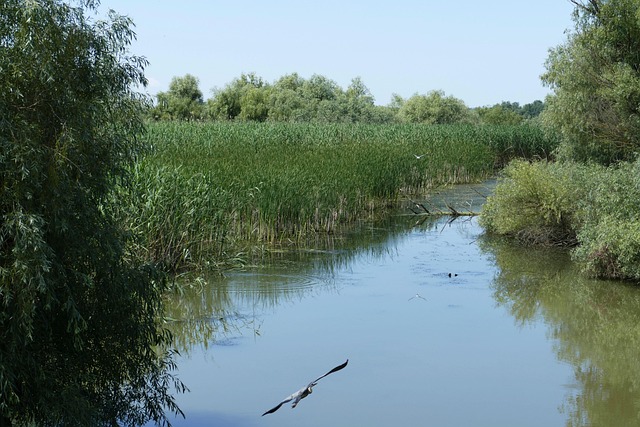
Free Romania Danube photo and picture

Water! We float, swim and splash in it. We can sink and drown in it. Most would agree that floating is better than sinking.

A similar logic can apply to boats, especially old boats. Our family has a delightful intergenerational appreciation of water and boats. And the Boat featured herein is a houseboat occupied, now and then, by Three Brothers. The Boat is quite old, and the Brothers too.

The boating exertions of years ago like water-skiing and exploring unchartered waters occur less often now, if at all.  Nowadays, the Brothers are happy to keep the old boat afloat, but even that requires repairs, and repairs of repairs. The original water tank leaked and required a new relocated water source: a “water bladder” that they promptly punctured, patched and replaced. Of course, there are boat bladders and then there are bladders of a human sort. Comparisons, Boat to Brothers, by simile, metaphor and analogy, are admitted forthwith.

Despite urinary challenges and nighttime trips to the head, the Brothers often remarked on how well they slept, afloat, gently rocking. Perhaps sleep was also so easy because of the late into the night talks that preceded it. These were not just any talks, as they often went from mundane topics like the weather to profound ones, like religion and politics. Come to think of it, on an old houseboat the weather is far from unimportant. After all, leaks come not just from below, but from above and all around with failing caulk and patches at windows, hatches, and doors. The Brothers, recognizing the ever-deteriorating problem, simply sheltered the Boat at a marina with a covered slip. Of course, all three noted their own slippages and leaks, exchanging tales of vulnerability, recovery, and the latest doctor’s office visit. This was a rite of aging!

Now to Politics, a subject that sadly splits up families in our confused and conflicted era. These Brothers went into those very murky waters and felt their common values and some sharp differences. It got edgy, but they somehow took the edge off. Was it unwise, rigid views giving way to wisdom and right understanding as sometimes happens with maturity? Maybe. But the greater credit probably belonged to something much bigger and below them, the vast waters of the Sacramento–San Joaquin River Delta: “Water is fluid, soft, and yielding. But water will wear away rock, which is rigid and cannot yield. As a rule, whatever is fluid, soft, and yielding will overcome whatever is rigid and hard. This is another paradox: what is soft is strong.”

Yes, besides Politics they spoke of Religion; of Lao Tzu and Saint Paul; of Rupert Spira and a Parish Priest. The Brothers included a Devout Catholic, an Advaita Vedantist, and a Buddhist with affection for Christianity. These talks were spirited agreements and disagreements, but more than that. Without the illusion of infinite time ahead, these Brothers (at their best) sought more “to understand, rather than be understood”. And one of them could even speak the Prayer of St. Frances by heart! These talks enlivened the old men, like a fresh tank of gas in that old Volvo Penta boat engine.

Sleepy and late at night, sometimes the talk turned to “mom and dad”. Each Brother gave voice to love and gratitude. Somehow, they were suddenly wide-awake, as if they were young men, teens or even children again. None had ignored the flaws, the dysfunctions, and the hurts. For each, in his own way, had confronted the past, accepted it; confessed the past, and come a ways toward forgiving parents… and especially themselves.

This was the key to buoyancy; this is what kept them afloat.

Free Airport Travel photo and picture

(Note: At the airport, flying to see a dear friend in Hospice…then at the Gate, word came in that he had just passed away.)

Airport skies heavy, dark.
Embarking planes rise, and
so dies and rises
my dear friend and brother.

The rain will come behind these tears.
Brokenhearted tears; grateful tears:
His fears of endless awful life
allayed by a final breath.

Keeping death close.
And weeping at the Seattle/Tacoma Gate,
a perfect, fated synchronicity.
Airport anonymity.
Tears at the A-12 Gate,
this gateless Gate,
this gone beyond:

Gate gate paragate
parasamgate.

Bodhi svaha,
My old friend.

Free Palm Sunday Palm Leaf photo and picture

Long ago an Indian Sage offered up some wisdom into an age-old philosophical dilemma: free will versus determinism.

Most of us enjoy the day-to-day experience of freedom as we choose the time we rise, our fare for breakfast and the route to work or school. Sometimes the multitude of choices may even overwhelm. Consider breakfast and the over-stocked cereal isle at the grocery store-Frosted Flakes or Frosted Mini Wheats? Sometimes, we just choose none of the above.

We also choose our friends and relationships; we choose our career paths and our politics. We become upset, and sometimes choose to lash out and even harm others. Most would agree that we make these decisions and are responsible for them.

But are we truly free? Some behaviorists argue for the profound effects of the environment to influence, if not determine, our actions. And some proponents of biological determinism posit that our physical and mental selves are a function of the physical body and hereditary traits. These influences of nurture and nature, respectively, are briefly mentioned here to set the scene for that Sage cited above.

The karmic principle of cause and effect was central to this Wise Man’s analysis and it aligns with determinism. By this spiritual concept, our seeming choices for setting the alarm, picking breakfast foods and driving routes are not choices at all but an expression of the thousands if not millions of factors that preceded those actions: “everything is predetermined”. Harms to others are an expression of this principle too. Referring to the everyday experience of me as the Ego, one could thus imagine an egoic being, predestined by its nurture/nature past, while just imagining a life of free will. Our suffering emanates from this core delusion. If I am free and do these harms I must be bad. If you are free and do these harms you must be bad. All is unforgivable.

But suppose our nature is two fold. There is the Ego, an expression of nurture and nature, conditioned by both with the illusion of free will. And there is a Self, or Soul or Buddha Nature which exists without encumbered conditioning and in perfect understanding and freedom. Identification with the former invokes a path of suffering; of guilt and grudge, of karma. Identification with the latter is to awaken to that sacred space of freedom and responsibility.

Note the irony. The conditioned and predestined Ego while un-free suffers the illusion of freedom. Our failure to understand that we are all the effect of a myriad of causes promotes endless fault-finding; blame and self-blame. On the other hand, The Self, free by its very nature, is unconditioned and embodies wisdom and compassion. From that perspective, there is deep understanding of the Ego predicament and tenderness over the pain of grudge, resentment and unforgivable acts.

Most of us occupy that Ego space a lot with an occasional glimpse into our True Nature as we experience a little freedom. But maybe that’s enough to understand that somehow we are both free and determined. These experiences are compatible-the compatibilist view. In that space, the free will illusion starts to recede. We begin to understand that the messes of life are karmic and nobody’s fault. In some sense, we all have done what we were destined to do. Nobody’s fault. In and from that space, we all might release and be released from past transgressions. This fragile insight comes and goes at first. The fault-finding Ego is unsatisfied, with last gasps to never pardon and forever condemn self and others.

We persevere and continue to cultivate those synergistic qualities of wisdom and compassion. We contemplate these elements; we chew and swallow the sacrament. Cause and effect wobbles; conditioning corrects to mere ethers. The Old Sage smiles.

We arrive without baggage at the forgiveness impasse again, and prepare to conquer it. But then the unexpected- All causes and effects have disappeared into the Self where the Truth is suddenly upon us. The Truth is that each of us has been natured and nurtured and acted as only we could all our lives. And in this brief, bright moment we understand. No blame.

There is nothing more to do. We are, all of us, already forgiven.

Free Monk Meditation photo and picture

Open them, shut them, open them shut them,
Give them a great big clap.
Open them, shut them, open them, shut them,
put them in your lap.


The classroom called special education holds labors and wonders and chants including this one with a hands-in-your-lap finale. This position can be a remarkable point of pause in the hands-busy lives of those students… and the rest of us.


You see, students in class learn life skills that most of the rest of us take for granted, as they pour a cup of juice or tie shoelaces. Hands dedicated to careful and slow pouring or tying is a thing of beauty to watch. To succeed, students like Dolores and Charlie and all of their peers paid rapt attention! And after awhile some teachers began to wonder: who is teaching whom?


What if we all sat still for a moment with our hands in the “pupil mudra”, simply in the lap? Or we could experiment with the symbolic hand gestures associated with various religious traditions like the meditative dhyana mudra: palm up right hand atop palm up left hand, thumbs touching. One could sneak the right hand from the lap to touch the ground even as the left hand remains in the lap. That’s the “earth witness mudra”–see the grand legend for that background story!


Pausing with hands in our lap invites a contemplative state. It sets the stage for the movements that follow. In fact, an interesting mindfulness practice is to simply watch our hands. After all, so many of our daily activities involve mindless hand-based movements, as we day-dream our way through pouring or tying or typing a sentence. We call it “muscle memory”, a kind of motor memory that joins the motor cortex with a part of the brain responsible for behaviors of habit. This efficiency, while essential, can lead to a lost-in-thought lifestyle.


Watching hands deliver these automatic actions now and then is to notice the miracle that we are. Next we could observe the thousands of similar automatic movements dedicated to eating a meal or driving a car or scrolling on a phone. Extraordinary!


No wonder that, in the classroom called special education, Dolores would exclaim in utter joy, “lets talk about hands!”

Free Boobook Owl photo and picture

Much has been written on judgment in contrast with discernment and this short essay may add little to that literature. But here goes:


We notice stuff. Our senses are constantly filled with input from the physical world around us and within us. So much so that we automatically select certain inputs, and habituate to the rest, all to minimize the overwhelm from our dynamic surroundings.


Sensory input becomes perception as we organize and interpret these data. One aspect of that process might be called discernment and one expression of discernment could be called judgment. Discernment is a function of mindfulness. It is fluid noticing from moment to moment. Judgment notes and solidifies; it takes a stand. Each has a place.


Judgment has numerous contexts and meanings from religion to law to medicine to the childhood admonition to “show good judgment”. Many of us failed that one!


Some religions have a final or last judgment as well as cautions about judging others; to stand in judgment. Clinical judgment relates to professionals in medicine, nursing and psychology, and a call for rational evaluation and healing. Law presents the archetypal deliverer of judgment, a judge. At best justice emerges from the rigor of good and fair judgments, and at worst, injustice ruins lives by fine or incarceration with financial and reputational harms done. Lastly there are the everyday, ubiquitous judgments of daily decisions to cross the street against a red light or wait for the green; to take an umbrella when storm clouds appear…or not.


Now consider the judgment of others. All around us we notice similarities and differences in appearance, opinion and behavior. And sometimes extreme and harmful behavior requires strong judgment and a hard NO. But in a world fueled by social media, cancel culture and our imperfect perceptions, too many judgments promote misunderstanding, a lot of ill-will and a big mess.


What if we paused instead and looked carefully, with discernment. It does not disappear the mess but invites us to engage and take a deep look. That judgment off-ramp is at hand, but we could hold off for a moment. It can be uncomfortable as we discern similarities and especially differences between people, places, things and situations. Resisting snap judgments allows us to fully engage with that experience.


The steadfast observer might persevere. Discernment after all is about noticing differences, suspending judgment and experiencing. It brings our wisdom and compassion to the forefront and gives a chance for our irrationalities and ill-will to recede.


We could wake up to our capacity to discern the world clearly and take a stand now and then. With practice, judging takes its proper place in moment-to-moment discernment.